
Travel & Exploration
 8 Minutes
  Travel & Exploration
  Apr 03, 2026
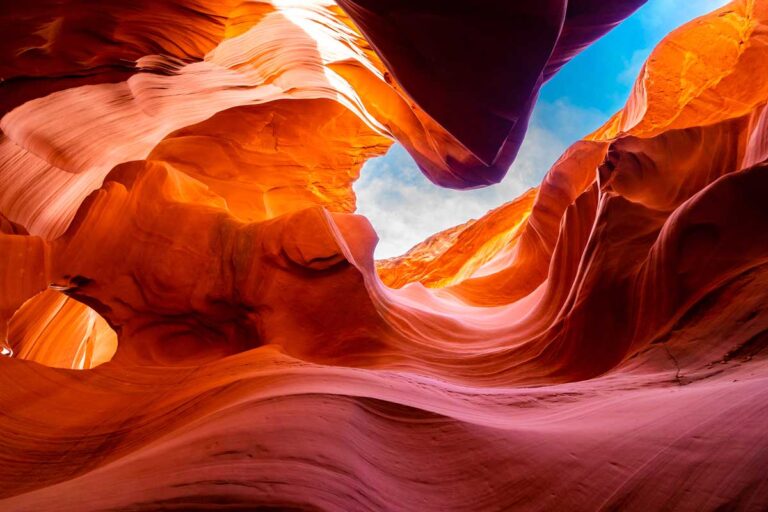
Antelope Canyon ranks among the most beautiful landscapes on the planet.
KEY POINTS
- Antelope Canyon sits on Navajo Nation land and can only be visited with an authorized Navajo guide — every ticket directly supports the Indigenous community that has stewarded this sacred landscape for generations.
- The canyon’s famous light beams appear in Upper Antelope Canyon during summer months between 10 a.m. and 2 p.m., but spring and fall visits offer cooler temperatures, thinner crowds, and equally dramatic color.
- Most visitors pair the canyon with Horseshoe Bend — a 270-degree bend in the Colorado River just five minutes from Page — making it a natural two-day Southwest itinerary anchored by two of Arizona’s most iconic landmarks.
- Antelope Canyon sits on Navajo Nation land and can only be visited with an authorized Navajo guide — every ticket directly supports the Indigenous community that has stewarded this sacred landscape for generations.
Breathtaking Antelope Canyon, the Southwest trip worth planning now.
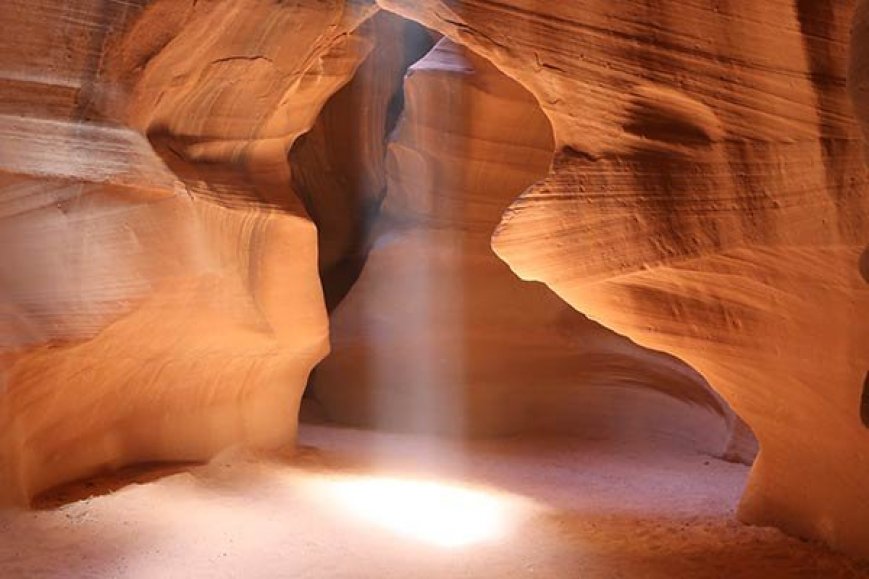
The walls close in, curving overhead in shades of copper and rust and deep burgundy, and a single shaft of light drops from a crack you can’t quite see, hitting the sand floor in a perfect column. Your Navajo guide pauses to let you take it in. The Diné name for this place is Tsé bighánílíní — “the place where water runs through rocks.”
This is the image that has lived on screensavers and travel magazines for two decades.
Antelope Canyon sits on Navajo Nation land about ten minutes east of Page, Arizona, a small town near the Utah border. The LeChee Chapter of the Navajo Nation oversees all operations here, ensuring that tourism benefits the community through jobs and revenue. Only certified Navajo guides are permitted to lead tours, ensuring visitor safety while also sharing insights into Navajo traditions, legends, and the canyon’s natural history. This is not a theme park. It is a living cultural landscape, and that distinction is felt the moment you step inside.
The Canyon Itself
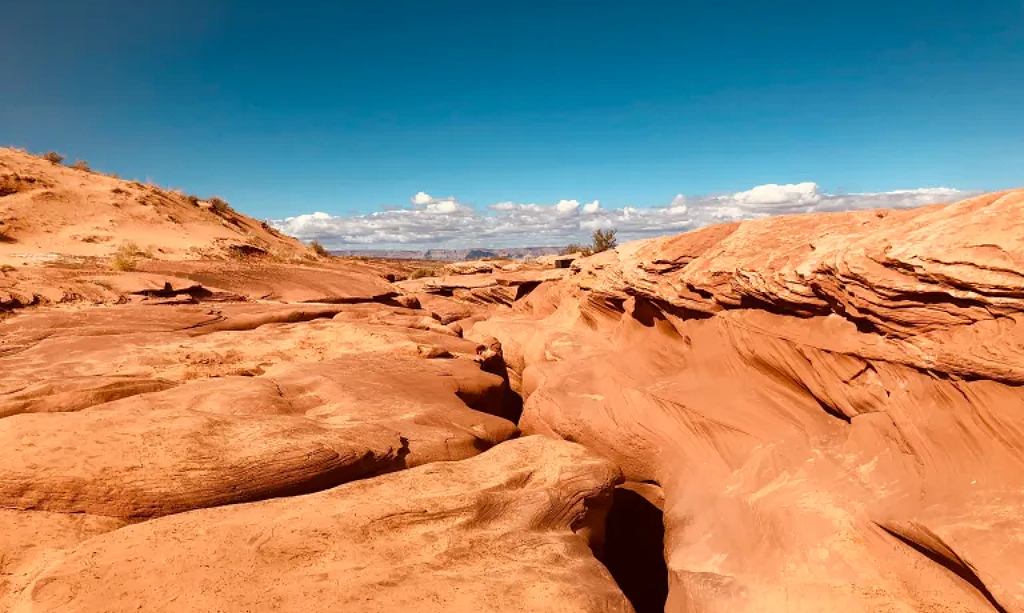
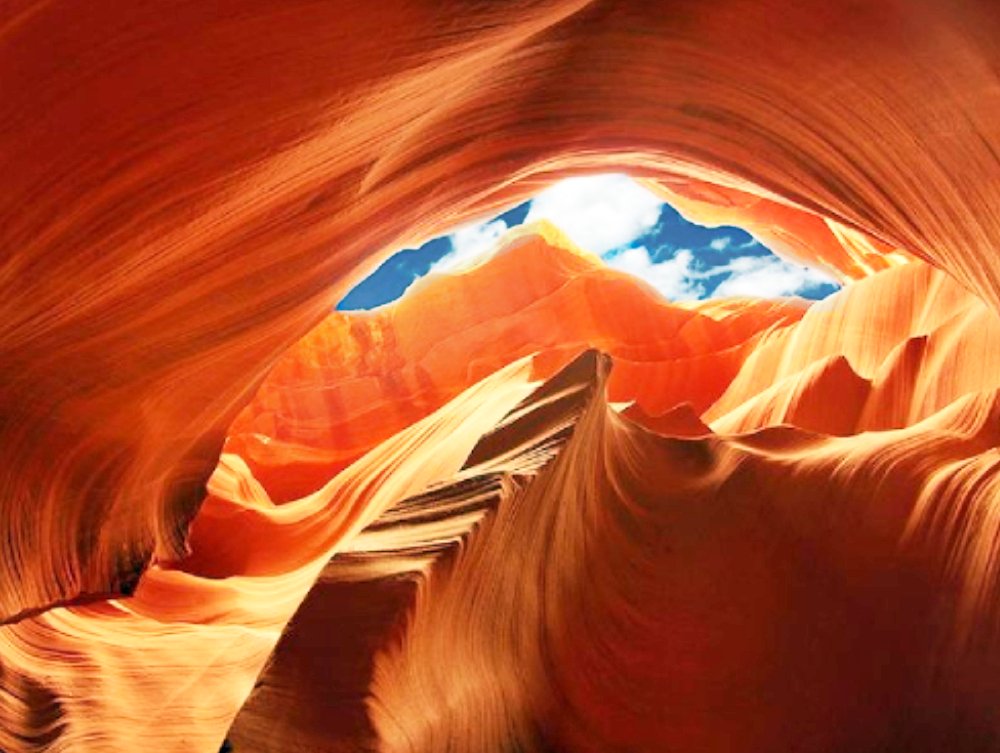
Antelope Canyon was formed by the erosion of Navajo Sandstone due to flash flooding and other natural processes. Rainwater, especially during monsoon season, runs into the extensive basin above the slot canyon sections, picking up speed and sand as it rushes into the narrow passageways. The result, over hundreds of thousands of years, is a corridor of sandstone so smooth and curving it looks hand-sculpted. Walls that shift from amber to deep burgundy to the pale pink of a winter sunrise depending on where you stand and what time of day it is.
The Navajo name for Upper Antelope Canyon is Tsé bighánílíní, meaning “the place where water runs through rocks.” The Navajo view it as a spiritual place where the earth, water, and light come together in harmony. Lower Antelope Canyon is called Hasdestwazi by the Navajo, which means “spiral rock arches.”
There are two main sections, and they offer genuinely different experiences.
Upper Antelope Canyon
Known as “The Crack” is the one in all the photographs. It is the easier of the two to walk through, and it is famous for the vertical light beams that appear in summer. Tours generally start around $50 for a 1.5-hour visit. The best time to experience the famous light beams is during the summer months, from June through August, between 10 a.m. and 2 p.m. The 11:40 a.m. slot is the most sought-after for photographers — and the priciest. Book it months in advance if that matters to you. If you are not chasing the beams specifically, spring and fall tours are calmer, cooler, and still visually extraordinary.
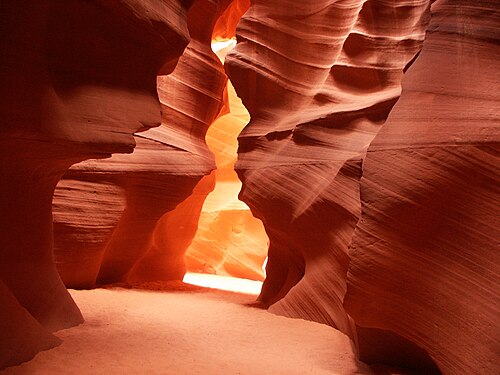
Lower Antelope Canyon “The Corkscrew”
Despite fewer direct sunbeams, the kaleidoscope of colors is just as striking, even magical.
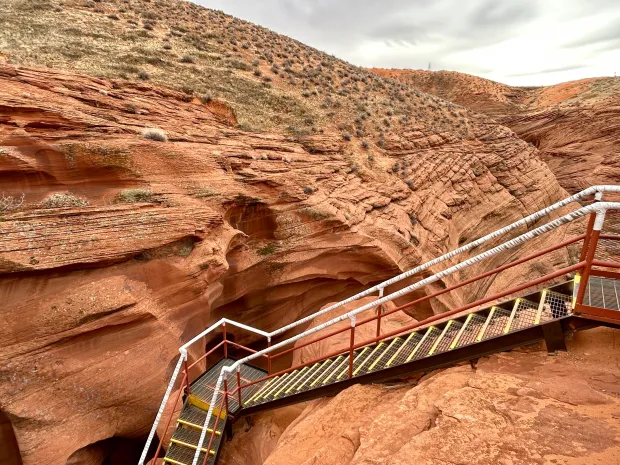
The entrance is longer and involves descending five flights of stairs into the canyon floor. The tour runs 60 to 90 minutes, beginning with a descent into the largest cavern of the tour. Tours generally start around $40 per adult. Most visitors who do both say Lower surprised them — the shapes are more intricate, the colors deeper, and the crowds slightly thinner. For travelers with mobility limitations or anyone who prefers flat walking, Upper Antelope Canyon is the better choice — wheelchairs and strollers are not permitted in either section, but Upper requires no stair climbing.
A third section, Canyon X, is operated separately and tends to draw smaller groups. It is worth looking into if you want a less trafficked experience.
The History Behind the Place
Before the mid-20th century, Antelope Canyon was known only to the Navajo people and considered a sacred, restricted space. According to Navajo oral tradition, around 1931, a young Navajo girl named Sue Tsosie was herding sheep when she stumbled upon a narrow fissure in the sandstone that led into what is today known as Upper Antelope Canyon. Mesmerized by the interplay of light and rock, she returned to her community and spoke of its hidden beauty.
The canyon’s wider story is inseparable from the history of the Navajo Nation itself. During the Long Walk of the 1860s, a mass deportation in which 10,000 Diné were forcibly removed from their land by the U.S. government, one family’s ancestor would hide people in slot canyons to avoid capture. That same family later made a permanent homestead at Antelope Canyon, and descendants of that family still guide visitors today through Taadidiin Tours.
Every four years, the Navajo people have the canyon blessed, giving thanks to the natural elements of the world that helped to form its unusual shape.
Plan Your Trip
How to Get There
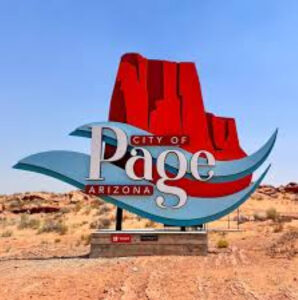
Page, Arizona is the hub.
From Phoenix, it is roughly 275 miles, about 4.5 to 5 hours on a scenic drive that takes you through Sedona and past Flagstaff.
From Flagstaff, it is about 135 miles, closer to 2.5 hours.
From Las Vegas, the drive runs approximately 270 miles, also around 4 hours, through a stark and beautiful stretch of high desert.
Page has its own small municipal airport (PGA) with connecting service, which is worth considering if you want to skip the drive.
Once you are in Page, you cannot drive directly to the canyon. All operators pick you up from their check-in locations and transport you by 4×4 vehicle to the canyon entrance.
Best Time to Visit:
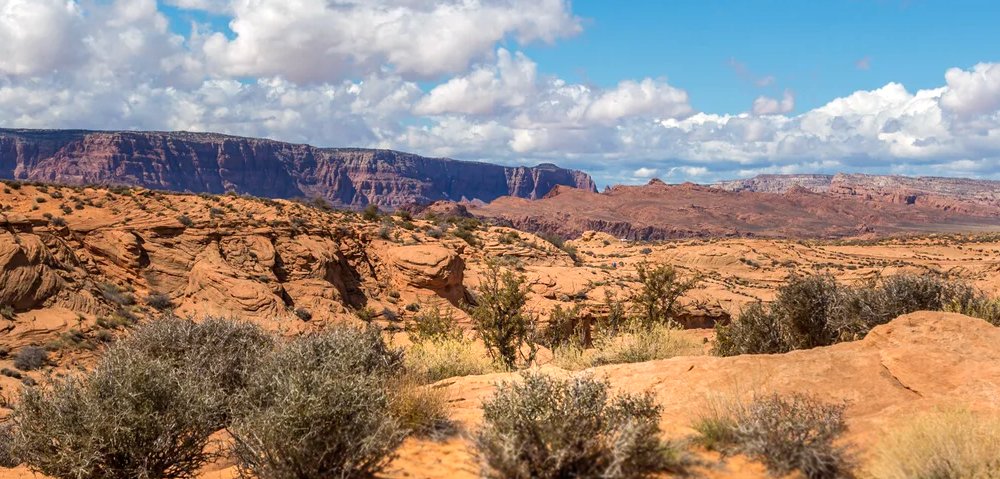
Visitors will find optimal conditions from March through October, when light beams shine most prominently in Upper Antelope Canyon. The desert climate in Page keeps temperatures comfortable between 70 and 90 degrees Fahrenheit during this window. Summer brings the iconic light beams but also crowds and triple-digit temperatures outside the canyon. March through May and September through October offer the best balance of comfortable weather, manageable visitor numbers, and still-striking light.
Avoid the canyon entirely during active thunderstorm warnings. Flash floods can reach the canyon even if rain falls dozens of miles away. Tour operators monitor conditions and will cancel tours when necessary.
Booking Your Tour
The Navajo Nation lists all authorized operators at navajonationparks.org. Admission to the park is $15 per person per section, paid separately from your tour fee. Each canyon section is managed by different tour operators and requires its own ticket and guided tour reservation.
For Upper Antelope, Antelope Canyon Navajo Tours is one of the most established operators, with multiple tours daily beginning around 7:30 a.m.
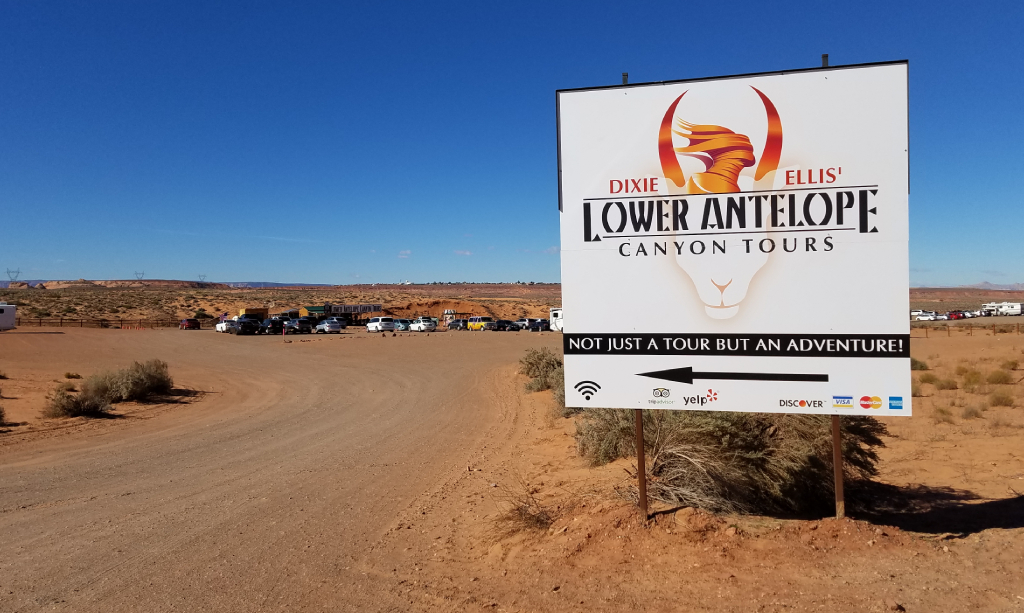
For Lower Antelope, Ken’s Tours has operated since 1994 and is located directly at the canyon entrance. Navajo-led, locally operated, Ken’s Tours offers a general guided walk of about 60 minutes as well as a Deluxe tour of 75 to 90 minutes that includes additional cultural context, exhibits at the Hózhǫ́ Haz’ą́ Heritage Site, and an authentic Native American meal. Dixie Ellis’s operation at Lower Antelope is another strong option, with guides who speak seven languages and more than 5,000 verified reviews.
Book as far ahead as possible, especially for spring and summer visits. Tours sell out weeks in advance during peak season.
What to Bring, What to Leave Behind
Wear closed-toe shoes with grip. The sand inside is fine and the stairs in Lower Antelope can be slippery. Dress in layers, as it can be 5 to 10 degrees cooler inside the canyon. Bags, backpacks, and fanny packs are strictly prohibited. Tripods and selfie sticks are not allowed on standard tours — only professional photography tours permit them. Your phone camera will do fine. Your guide will likely help you get better shots than you expected.
Special Note: There are no restrooms in the canyon, though they are available at operator offices.
Where to Stay:
For most visitors, the choice is between staying comfortably in Page or splurging on something genuinely memorable just across the Utah border.
In Page itself, the Hyatt Place Page/Lake Powell is the most polished option in town, with desert views, a pool, a cocktail bar, and a complimentary breakfast. The Best Western Plus at Lake Powell is solid mid-range and a good base if you plan to spend time at both Antelope Canyon and Horseshoe Bend over a couple of days. Rates at either property generally run $150 to $250 per night depending on season.
For a once-in-a-decade stay, Amangiri in Canyon Point, Utah, about 25 minutes from Page, is in a category of its own. Built around a central swimming pool and tucked into a protected valley with sweeping views of the Grand Staircase-Escalante National Monument, the resort’s 34 modernist suites include outdoor lounges, fireplaces, and private pools. The resort offers access to Antelope Canyon tours alongside helicopter rides, via ferrata climbing, horseback riding, and a full spa. Rooms were $3,500 per night during peak season as of 2021. Current rates are higher. It is not for every trip, but if there is a milestone birthday or anniversary attached to this journey, it is worth knowing the option exists.
The Detours You Shouldn't Skip
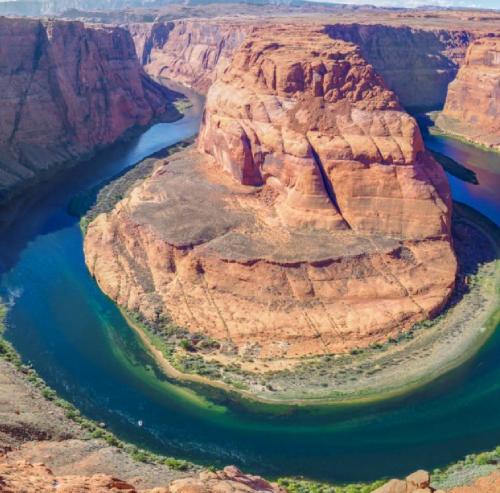
Horseshoe Bend, a 270-degree bend in the Colorado River carved 1,000 feet into the canyon floor, is a $10 per-vehicle stop just 5 minutes from downtown Page. A paved 1.2-mile round-trip trail leads to the overlook, and the path is wheelchair-friendly.
Antelope Point Marina
located approximately 5 miles northeast of Page, Arizona, roughly 10-15 minute drive from downtown Page.
Antelope Point Marina is set on 600 acres of Navajo Nation land on the Arizona-Utah border and is a great half-day trip from Page.
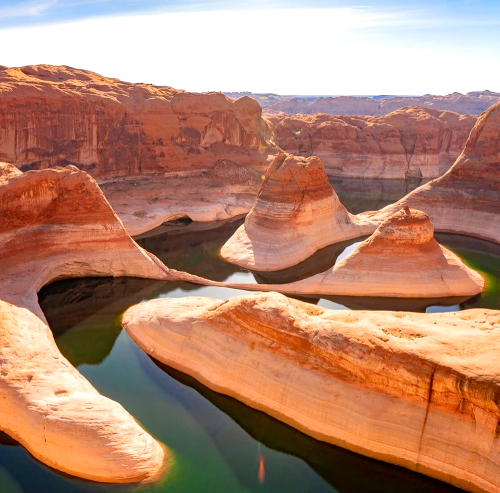
Lake Powell offers a full day on the water for anyone who wants to extend the trip. The base for houseboat rentals, wakeboarding, fishing, and scenic boat tours. The marina’s Jádí’Tooh Restaurant, billed as the world’s largest floating restaurant, is worth a stop for lunch or a drink before heading back out.
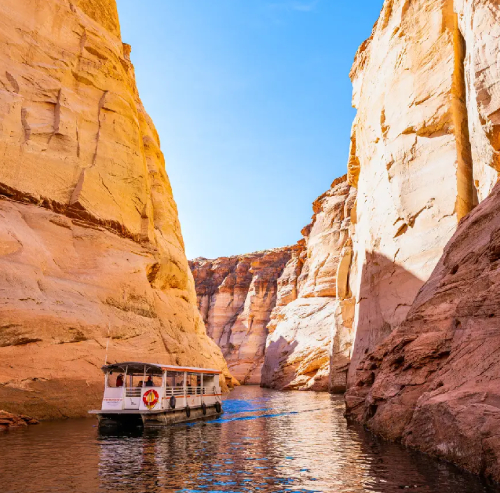
The Antelope Canyon Boat Tour follows the Colorado River’s original channel directly to the canyon opening from the water — a perspective most visitors never see.
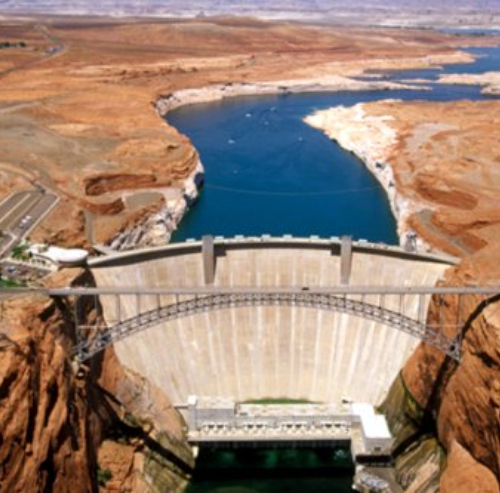
Glen Canyon Dam is also worth a stop. If your travel window allows. The South Rim of the Grand Canyon is about 2.5 hours south. Far enough to need a dedicated day.
Useful Links:
- Navajo Nation Parks & Recreation — Antelope Canyon Authorized Tour Operators
- Ken’s Tours — Lower Antelope Canyon
- Dixie Ellis’ Lower Antelope Canyon Tours
- U.S. News Travel — Best Antelope Canyon Tours
- Visit Arizona — A Guide to Visiting Antelope Canyon the Right Way
- Antelope Canyon Tours — Cultural History and Navajo Significance
- Navajo Tours — Antelope Canyon Cultural Background
- Amangiri Resort — Canyon Point, Utah
- Inspire Travel Eat — Horseshoe Bend Guide
- TourRadar — Antelope Canyon Tour Overview
* images are supplied by 6090 team or submitted by members. If you think one has been used in error please contact us using the contact us form.