
General Health
Move More After 60
Five Activities That Are Easy on the Body and the Budget
There’s a moment most of us recognize, maybe you bent down to pick something up and felt a twinge, or you got winded climbing stairs that never used to bother you. It’s easy to think that’s just “getting older.” But here’s what the research keeps showing: a lot of what we assume is age-related decline is actually what happens when we stop moving.
The good news is you don’t need to become an athlete, or spend a lot of money to get moving more. The most effective activities for people over 60 are largely free, require no special equipment, and can be done close to home. You just need to find something that works for your body and that you’ll actually want to do again next week!
Here are five activities that hold up particularly well for people in their 60s, 70s, 80s, and beyond and great reasons to get going, NOW!
1. Swimming
Water has a near-magical quality for older bodies. When you’re immersed to chest depth, buoyancy reduces the weight-bearing load on your joints by around 75 percent. Immersed to the shoulders, it’s reduced to almost 90 percent. For anyone dealing with knee pain, hip replacements, or arthritis, that’s not a small thing and it can mean the difference between staying active and sitting on the sidelines.
Swimming isn’t just easy on the joints. It works almost every major muscle group at once — arms, legs, core, back — and it builds the kind of endurance that makes everyday life feel less tiring.
Research in older adults found significant improvements in lung function measurements, including forced vital capacity and peak expiratory flow rate in people who swam regularly, compared to those who were sedentary. Your heart and lungs get a solid workout without the pounding that running or even walking on hard pavement can cause.
Lap swimming works well, but so do water aerobics classes, which have the added bonus of being social. Many community pools offer programs specifically for older adults, often in the mornings.
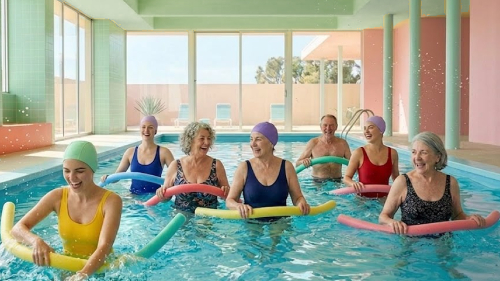
Swimming is not weight-bearing, meaning it does not help maintain bone density, so it’s best combined with other activities rather than used as a sole form of exercise.
2. Walking (Done Properly)
Walking sounds too simple to be worth mentioning. It isn’t.
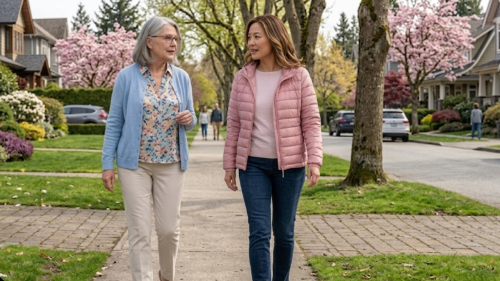
The key word is “properly” means brisk enough that you could hold a conversation but not sing comfortably, and done consistently, ideally most days of the week. At that level of effort, walking delivers genuine cardiovascular benefit.
A cohort study of over 2,000 adults published in JAMA Network Open found that people who took at least 7,000 steps a day had a 50 to 70 percent lower risk of mortality compared to those who took fewer steps.
What makes walking particularly valuable for people over 60 is the combination of benefits it delivers together. It keeps leg and hip muscles working, which matters enormously for balance and preventing falls.
Walking is also weight-bearing, which means it helps maintain bone density in a way swimming and cycling cannot. And it’s accessible: no equipment, no membership, no learning curve.
Walking outdoors adds another layer. Natural light exposure supports vitamin D production and helps regulate sleep, both of which tend to suffer as we age.
And if you walk with someone, a friend, a neighbor or dog, you’re also taking care of your mental health. Loneliness is a real health risk, not just an emotional one.
If flat pavement feels easy, adding gentle hills or light hand weights increases the challenge without dramatically raising injury risk.
3. Tai Chi
Tai chi looks like slow-motion movement, which is partly why it’s easy to underestimate. What tai chi actually delivers, and what the research backs up, is meaningful improvement in balance and a reduction in falls.
A meta-analysis found that tai chi reduces the rate of falls by around 43 percent in the first eleven months of practice. For context, falls among adults 65 and older caused over 38,000 deaths in 2021, making it the leading cause of injury death for that group.
Anything that meaningfully cuts that risk deserves serious attention.
The way tai chi works is through deliberate, controlled weight shifting. Each movement requires you to balance on one leg momentarily, engage your core, and stay aware of where your body is in space.
The unique characteristics of tai chi, including controlled displacement of body mass over the base of support, range of motion in the ankle and hip, and emphasis on lower limb muscle function contribute to greater postural stability.
That kind of training directly counteracts the balance decline that comes with aging. Beyond falls, tai chi has shown measurable benefits for blood pressure, anxiety, sleep quality, and joint stiffness.
It’s practiced standing, so it keeps leg muscles engaged. It’s also low-impact enough that people with most chronic conditions can participate, and it scales easily from beginners learning basic forms to more advanced practitioners.
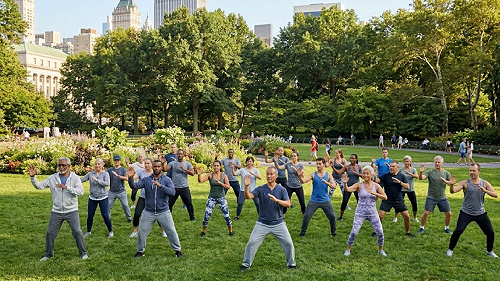
Most classes are social, affordable, and often available through community centers and senior programs. Some are free in public parks.
4. Cycling (or Stationary Biking)
Cycling sits in a sweet spot: it’s genuinely aerobic, it works the large muscles of the legs and glutes, and it does all of this with very little stress on the knees and hips compared to running.
Research using instrumented knee implants found that tibiofemoral forces during cycling were smaller than those during walking. In simple terms, researchers concluded that cycling at moderate power levels is suited for people with osteoarthritis. For anyone with some knee discomfort who still wants a real workout, that matters.
The rhythmic motion of pedaling helps move synovial fluid (the lubricating liquid inside joints) which helps reduce friction and delivers nutrients to cartilage. A large study found that people who cycled were 21 percent less likely to have X-ray evidence of osteoarthritis in their knees compared to those who had never biked.
Beyond the joints, cycling builds leg strength that directly supports everyday function: getting up from chairs, climbing stairs, carrying groceries. As muscle mass declines with age, maintaining leg strength becomes one of the most important things you can do for independence.
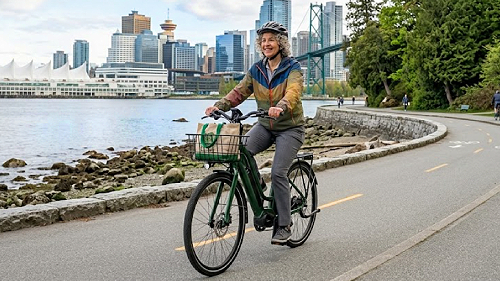
- Outdoors cycling brings fresh air and the navigation challenge that keeps the brain active.
- Stationary bikes remove concerns about traffic and weather, a real consideration if balance or confidence on two wheels has become an issue.
- Recumbent bikes, where you sit in a slightly reclined position, are particularly comfortable for people with lower back issues.
5. Strength Training
This one makes some people nervous, particularly if they picture crowded gyms with heavy barbells. Ignore that image.
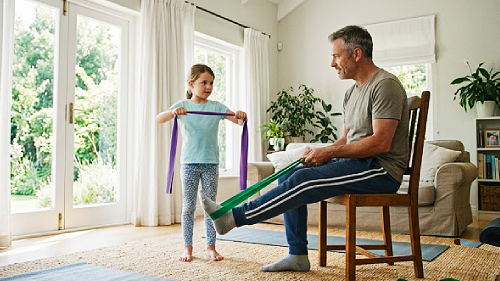
Strength training for people over 60 can be as simple as resistance bands at home, light dumbbells, or bodyweight exercises like modified push-ups and chair squats. What matters is that muscles are being asked to work against some form of resistance, regularly.
Why does this matter so much?
Muscle mass decreases approximately 3 to 8 percent per decade after age 30, and this rate of decline is even higher after age 60. That loss directly affects balance, metabolism, bone density, and the ability to do the things that make life enjoyable, carrying luggage, playing with grandchildren, getting up off the floor.
The World Health Organization recommends that older adults do muscle-strengthening activities involving all major muscle groups, aiming for two or more days a week.
The other thing strength training does that most activities don’t is load the bones. Weight-bearing resistance exercise is one of the few activities that directly stimulates bone-building, counteracting the density loss that accelerates after menopause and with age generally.
Strength training is one of the only activities here that simultaneously addresses muscle loss, bone density, balance, and metabolic health, four of the most consequential aging-related declines.
A Final Word
None of these activities require you to be fit already. They're starting points, not finish lines.
The research on aging and movement points in one consistent direction: the people who stay most independent, most mentally sharp, and most connected to life as they age are the ones who keep their bodies in some form of regular motion, in whatever way works for them.