
Travel & Exploration
New Zealand’s Underground Galaxy.
 7 Minutes
  Travel & Exploration
  Apr 01, 2026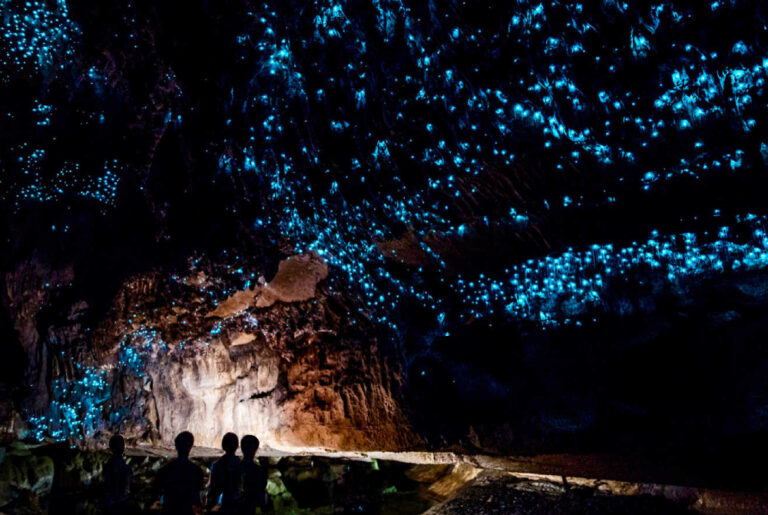
KEY POINTS
- The Waitomo Glowworm Caves are home to a bioluminescent species found only in Australasia. Their blue-green glow creates a living constellation across cave ceilings 30 million years in the making.
- Discovered in 1887 by Māori Chief Tane Tinorau and English surveyor Fred Mace, the caves remain under Māori guardianship today.
- Three distinct caves sit within the same area. The iconic Glowworm Grotto, the expansive Ruakuri, and the stalactite-rich Aranui, making Waitomo a full day’s destination rather than a single stop.
Deep in the limestone hills of New Zealand’s North Island, a cave ceiling shimmers with thousands of tiny blue-green lights. They look exactly like stars. They are not.
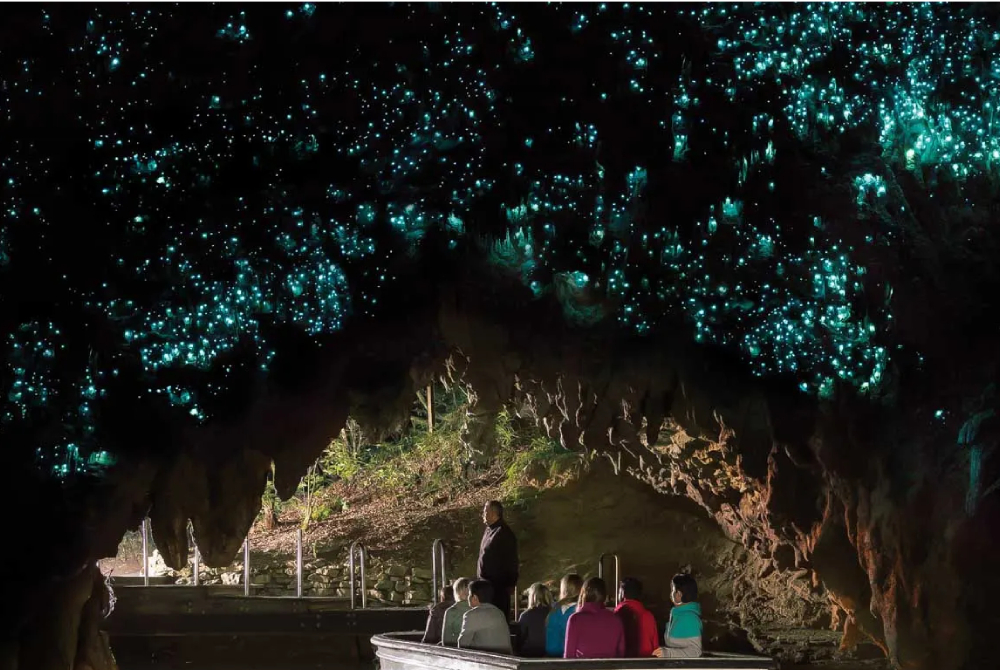
There is a moment on the boat ride at Waitomo Glowworm Caves when the guide goes quiet, the oars come up, and the wooden boat drifts in complete silence through a cavern so dark you can’t see your hands. Then your eyes adjust. And above you — covering every inch of a 100-foot ceiling — are thousands of tiny, steady, blue-green lights. Living things. Each one a larva no bigger than a matchstick, producing a bioluminescent glow to lure insects into its silk fishing lines.
This is the Glowworm Grotto, and it is one of those rare travel experiences that matches — and then quietly exceeds — everything you imagined before you arrived.
The Waitomo Glowworm Cave has been guided since the late 1880s, with visitor numbers of around 500,000 annually. That kind of draw is earned. This is not a manufactured attraction. It is a geological and biological spectacle that took 30 million years to produce, and it exists in only in Australasia.
The Creature Doing All the Work
The glowworm’s biology is worth knowing before you arrive. It makes what you’re seeing far more remarkable.
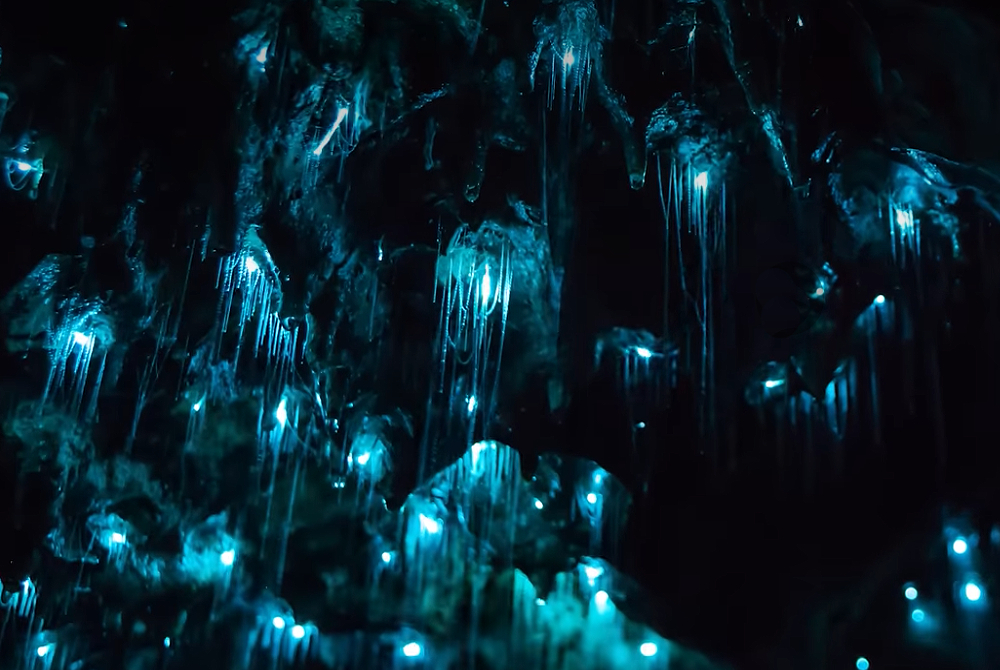
Arachnocampa luminosa is a species of fungus gnat found nowhere else on earth. In te reo Māori, they are called titiwai, meaning “lights reflected in water.” The blue-green light is produced by a chemical reaction: luciferase reacts with a waste product called luciferin, and combined with oxygen, generates the characteristic glow.
What the creature is actually doing with that glow is hunting. Each larva suspends up to 70 silk fishing lines from the cave ceiling, each studded with sticky mucous droplets. When insects fly toward the light and become trapped, the larva reels in the strand and feeds.
The hungrier the larva, the brighter it glows. So the most spectacular displays — the densest, brightest constellations — are, in a sense, the hungriest ceilings.
Adult glowworms live only a few days, have no mouths, and survive solely to reproduce before dying. The larval stage, the glowing stage, is where virtually all of a glowworm’s life is actually lived.
Inside The Cave
Guided tours cover more than 250 meters of underground scenery, beginning with the Cathedral, a soaring limestone chamber renowned for its acoustics, before descending to the Glowworm Grotto and the boat ride. The whole experience runs about 45 minutes.
Many of the guides are descendants of Māori Chief Tane Tinorau, who first explored the cave alongside English surveyor Fred Mace. That original exploration happened in December 1887, when the two built a raft and entered the cave by candlelight through the stream entrance, which is now the tourist exit.
The guides who work these tours today carry that history personally, and it comes through.
The Glowworm Cave is the headline, but visitors who stay for the full Waitomo experience consistently say that Ruakuri Cave was the revelation.
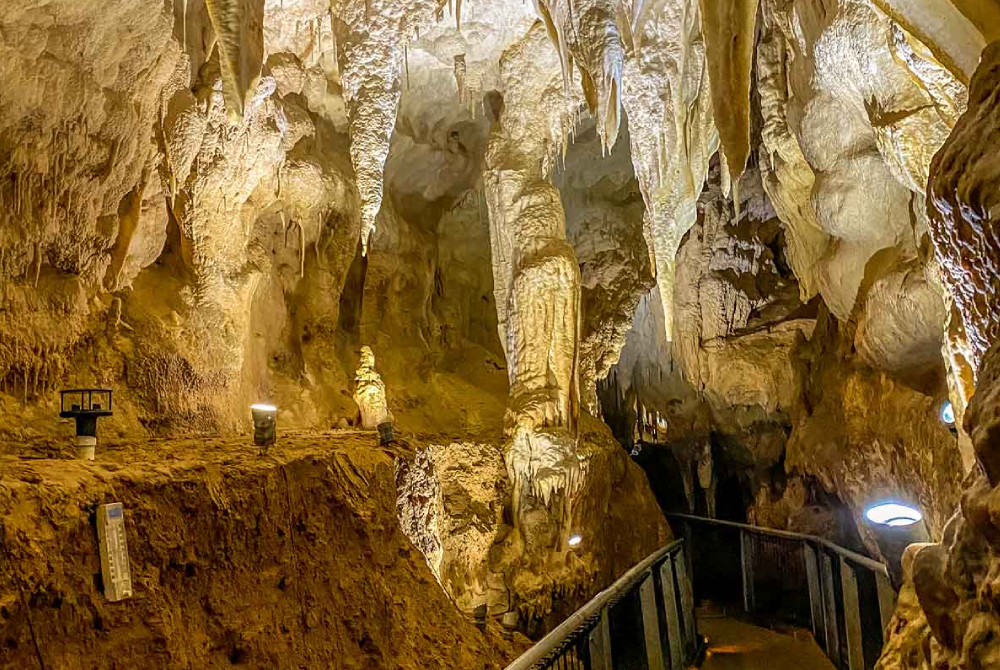
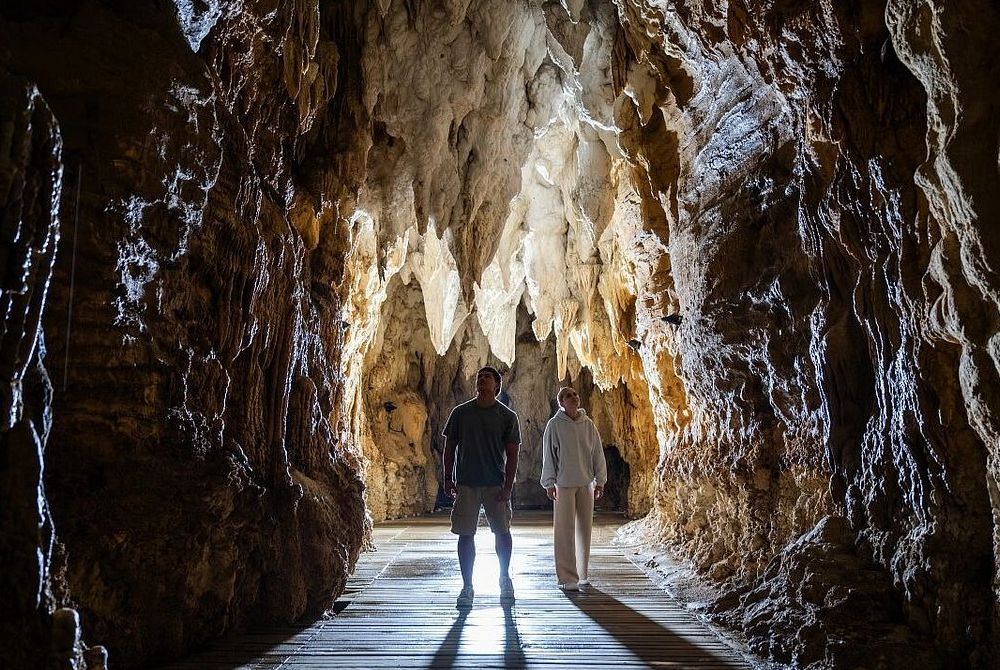
Ruakuri is the largest cave in the Waitomo area, entered through a spectacular man-made spiral entrance that opens onto an extensive system of limestone formations and crystal tapestries. It runs about 90 minutes, allows photography (the Glowworm Cave does not), and operates at a pace that suits travelers who want depth over speed.
The most popular combination is the Waitomo Glowworm Cave plus Ruakuri — two tours, thousands of glowworms, and a genuinely different experience in each.
Aranui Cave is the quieter third option: a dry cave with no underground river, famous for its delicate stalactite formations and Māori myth. It’s a good call for those who want a gentler, more contemplative pace.
A Few Things Worth Knowing Before You Go
Glowworms are visible year-round. There is no best season. Morning tours tend to be less crowded.
Book ahead. Capacity is limited, tours fill up, and arriving late forfeits your ticket with no guarantee of rebooking.
Photography rules vary by cave. No cameras inside the Waitomo Glowworm Cave; photography is permitted in Ruakuri. Plan accordingly.
Wear comfortable, non-slip shoes. Some areas of the cave can be wet and slippery. Leave the nice shoes at the hotel.
Plan Your Trip
Waitomo sits in the Waikato region of New Zealand’s North Island. It is not on the way to anything — you have to mean to go — and that is part of what makes it feel like a reward.
From Auckland (most common entry point): About 200 km south, roughly 2.5 hours by car via State Highway 1 to SH39 to SH3. InterCity buses also run direct service from Auckland, with the journey taking 3–4 hours.
From Hamilton: Closest major city, 75 km away — about an hour’s drive via SH3.
From Rotorua: 160 km, approximately 2 hours. Many operators combine Rotorua’s geothermal sites with a Waitomo caves visit in a single day, which works well as a full itinerary.
Practical tip: Fuel up in a larger town before heading into Waitomo, it’s rural, and services thin out quickly. Roads are well-maintained, but the last stretch is winding farmland.
Tour times: Tours depart multiple times daily; pre-booking is essential, and you should check in at least 30 minutes before your departure time. The cave is cashless.
Ticket prices: Around NZD $81 for adults, NZD $37 for children (ages 4–14). Infants under 4 are free but must be included in the booking.
The Waitomo Glowworm Cave is accessible to visitors with reasonable mobility and good handrails and paths throughout, though it does not have full wheelchair access, however the Ruakuri Cave, nearby, is wheelchair friendly.
The Detour You Shouldn’t Skip
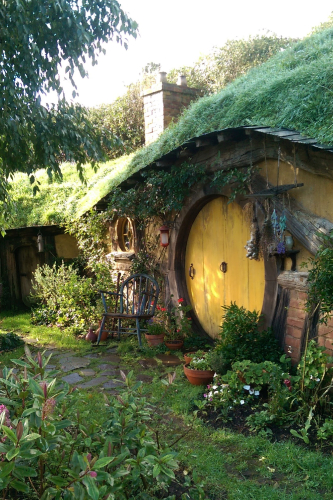
Combine with Hobbiton if the schedule allows. The Matamata film set is about 80 km from Waitomo, and many operators run combination day tours.
For travelers working through a New Zealand North Island itinerary and are Lord Of The Rings fans, this is the perfect add-on.
Useful Links
Book tours: waitomo.com The official operator for all three main caves; pre-booking required.
Glowworm biology (Te Ara Encyclopedia): teara.govt.nz/en/glow-worms Authoritative overview of Arachnocampa luminosa and its life cycle.
Getting there from Auckland by coach bus: intercity.co.nz InterCity runs regular service with good connections.